

Seabirds
Seabirds are usually at their best where the coast is doing something useful: cliffs, harbour mouths, headlands and rough crossings. The photographs here follow breeding colonies, commuting lines and birds working the tide, from auks and gannets to gulls, terns and fulmars. Plumage matters, but so do silhouette, wing action and how each bird carries itself in changing weather.
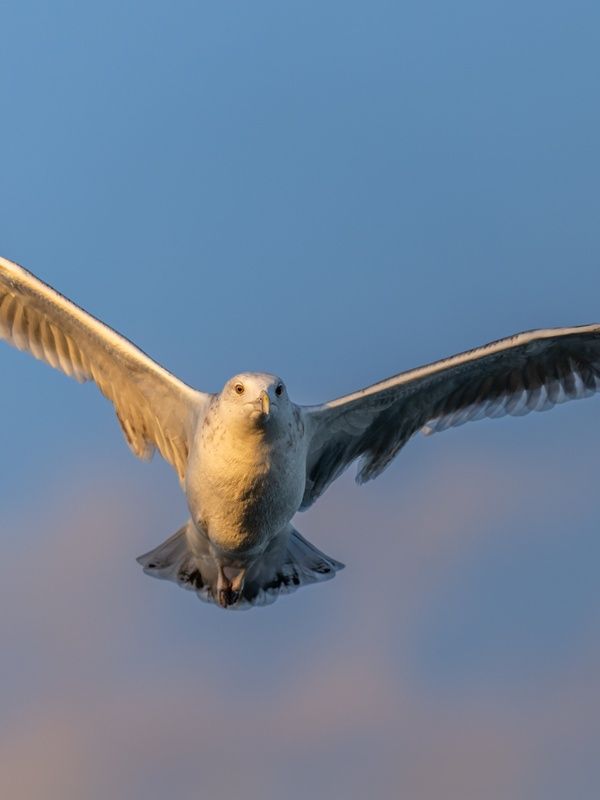
The Laridae family includes gulls, terns, and skimmers. These are medium to large seabirds that share webbed feet, pointed bills, and excellent flying skills. Gulls are usually sturdy birds with broader wings and hooked bills. Terns are slimmer, with forked tails and straight, pointed bills. Skimmers have a unique long lower bill that they use to feed on the water surface. Most of these birds have white, grey, and black feathers, which can change with the seasons. Young birds often have brown feathers. They live in coastal areas, estuaries, lakes, and rivers all over the world. Many species breed along British shores. These birds are very noisy, especially at their breeding sites. They usually eat whatever food is available, including fish, small creatures, and rubbish. Many of them gather in large groups for resting and nesting. Their flight is smooth and light, with terns especially known for hovering in the air and diving quickly into the water to catch food.




The Alcidae are sturdy seabirds with short wings, specially adapted for chasing fish and small sea creatures underwater. They use their wings to "fly" below the surface, pushing themselves forward with strong strokes and steering with their feet. On land, they stand upright, similar to penguins. Most of these birds nest in groups, often choosing sea cliffs, rocky islands, and piles of stones around northern coasts. In British waters, alcids are mainly found along the northern and western shores, with large breeding groups in Scotland, Wales, and northern England. Outside the breeding season, many alcids spread out across the open sea. You can tell different species apart by the shape and colour of their bills, the patterns of their feathers, especially on the head and neck. Several species also change their feather colours dramatically between the breeding season and winter.


The Suliformes are medium to large aquatic birds superbly adapted for diving and fishing in marine environments. Members of this order share distinctive anatomical features including all four toes connected by webbing, a trait known as totipalmate feet, and a gular pouch of varying size beneath the bill. Their bodies are streamlined with dense plumage that aids underwater propulsion. These birds exhibit remarkable diving abilities, plunging from height or swimming underwater to pursue fish. Most species have long necks, pointed or hooked bills, and relatively short legs set far back on the body. Plumage is typically dark in cormorants and shags, whilst gannets and boobies display striking white and black patterns. Suliformes inhabit coastal waters, islands, and some inland waterways across temperate and tropical regions worldwide. Several species breed colonially on cliffs, rocky islands, or in trees, often returning to traditional sites year after year.


These skilled ocean travellers are known for their tube-shaped nostrils, a special feature among sea birds that contains glands to remove salt, which is important for living far out at sea. This group includes birds ranging from huge albatrosses with wingspans over three metres to tiny storm petrels barely bigger than sparrows. They all have a distinctive musky smell and produce oils in their stomachs to feed their chicks and defend themselves. They are experts at a flying technique called dynamic soaring, which lets them travel great distances while using very little energy. They rarely come ashore except to breed. They are found in all the world's oceans but are most common in the Southern Hemisphere. Some species often appear in British waters, especially during strong autumn winds. These birds nest in colonies on remote islands and cliffs by the coast, usually laying just one egg. They mature slowly, care for their young for a long time, and can live for many decades, with some living beyond sixty years.
